

Defguard 1.6 brings Zero-touch Enrollment at Enterprise Scale for WireGuard®
December 19, 2025 • Michał Gryczka
9 min to read
Our mission at Defguard is to deliver a complete self-hosted WireGuard® Enterprise VPN management solution that is fully private and guarantees total control and infrastructure ownership.
Release 1.6 marks an important step in that journey by introducing features requested by many medium and large enterprises—features that make Defguard a compelling alternative to solutions like Fortinet, Tailscale, and traditional OpenVPN setups, making large-scale deployments faster and client management easier.
TL;DR - Key Highlights:
- 🔐 Pre-logon VPN - Connect to AD before Windows login
- ⚡ Zero-touch Enrollment - Automate user provisioning at scale
- 🍎 macOS App Store - Native Swift VPN with system integration
- 🪟 Windows MSI - Enterprise deployment via Intune/GPO
- 📏 MTU Settings - Fix connectivity on restrictive networks
You can support us by leaving a star on GitHub 🙏
Organisations that use Active Directory (AD) to authenticate users on Windows machines face a significant remote access problem: AD should never be exposed to the public internet, since it was designed exclusively for intranet use. Thus, users working remotely—outside of the organisation’s perimeter—cannot securely log in without risking exposure of the AD infrastructure to external threats.
The secure solution of that remote access problem is to put Active Directory behind VPN. It works only with VPNs that support establishing connection before the user logs in.
Defguard 1.6 is the first—and currently the only—on-premises enterprise VPN solution that establishes WireGuard® connections before user login.
We introduced Service Locations - a special kind of locations that allow establishing automatic WireGuard® VPN connections on system boot and are not visible to the end user.
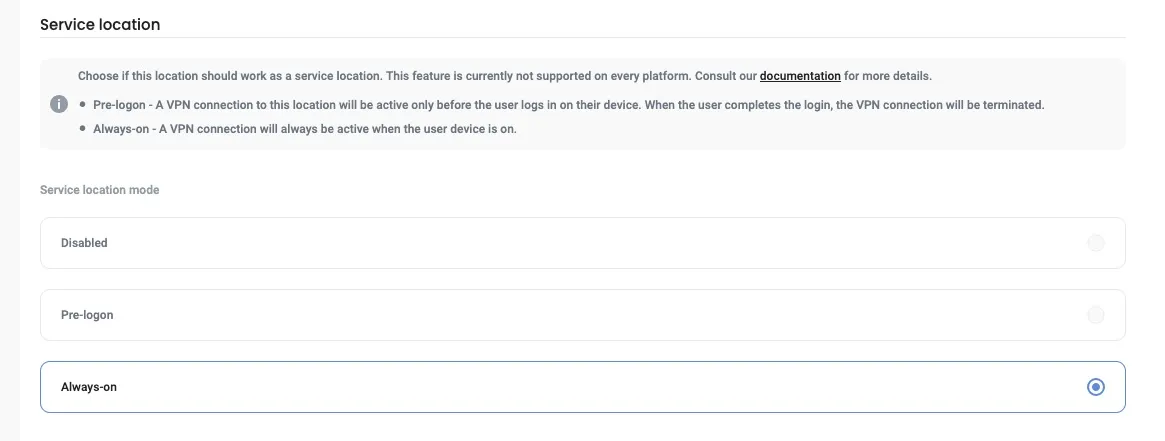
As shown on a location configuration screenshot above, Service Location can run in two modes: “Pre-logon” and “Always-on”.
In Pre-logon mode the connection is terminated when the user completes login to their system account. This way devices can securely connect to the domain and authenticate the user without the need to expose Active Directory and keep the connection time limited only to necessary minimum - authentication.
If the lack of pre-logon option for WireGuard® was a blocker for your deployment, now you can give it a try with Defguard.
Service locations can be also configured to stay active after the user logs in by selecting “Always-on” mode. The connection won’t be terminated or restarted unless the Desktop Client receives a network update or is uninstalled.
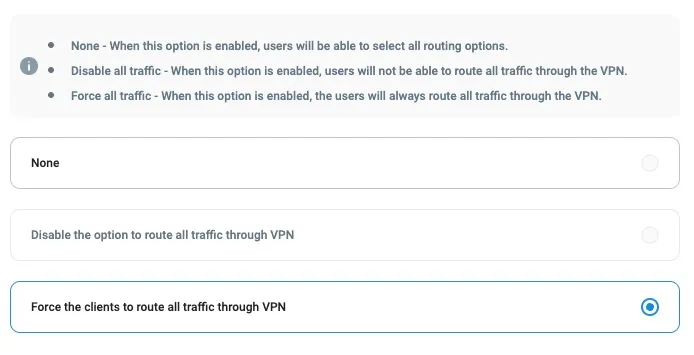
Always-on mode paired with the option to force the clients to route all traffic through the VPN allows the admin to enforce strict security policy and guarantee access to on-prem resources, preventing data leaks on untrusted networks.
Dive deeper with Service Locations documentation: https://docs.defguard.net/1.6/features/service-locations
From the outset, Defguard focused on simplicity and security of user enrollment by offering a secure enrollment portal. While convenient for smaller organisations, this approach has limitations when enrolling hundreds or thousands of users.
With the Defguard 1.6 release, we deliver the core elements necessary for automation of Desktop Client Provisioning on all platforms (Windows, Mac and Linux). On a high level:
Altogether this release provides all necessary tools for the admins to fully automate user enrollment and device provisioning.
The provisioning process is dependent on your specific environment and tooling but there are some general steps to follow:
This way you can achieve Zero-touch user enrollment and scalability of your deployments.
You can find more details in documentation: https://docs.defguard.net/1.6/features/desktop-client-auto-provisioning
The macOS Client now integrates with the macOS system, removing the dependency on external WireGuard® binaries and introducing native Swift/macOS VPN implementation.
This allows for an improved macOS usability:
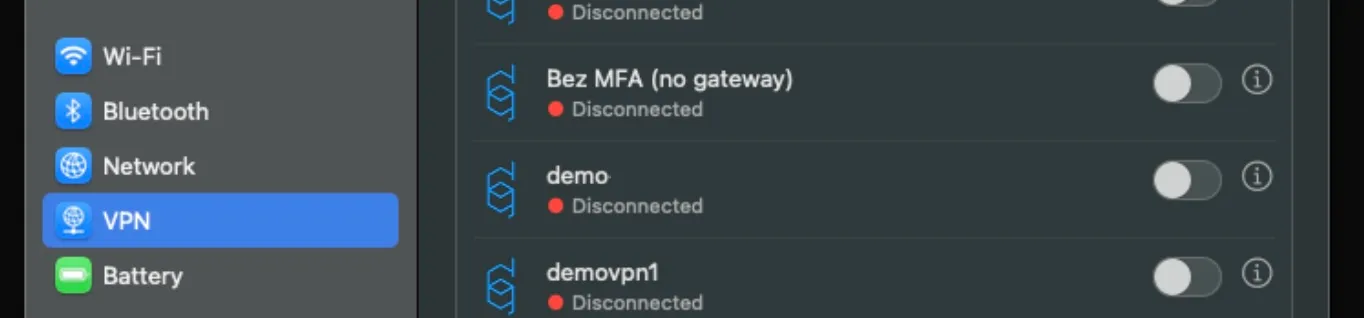
These changes make App Store distribution possible and future Defguard client updates seamless.
You can download Defguard Desktop client from AppStore
Because of Apple’s restrictive rules for App Store apps (each app is isolated and access to its data is restricted by non‑App‑Store apps) migrating from Defguard 1.5 (PKG) to 1.6 (App Store) is not a “regular upgrade” and requires moving your 1.5 client settings or re‑enrolling in the new version.
To upgrade to the client, while maintaining the configuration, please follow the Migration Guide: New Defguard on macOS - App Store Launch and Migration
The Windows Desktop Client now uses a native WireGuard® networking implementation based on WireGuardNT, a high-performance in-kernel WireGuard® implementation for Windows (https://github.com/WireGuard/wireguard-nt). By removing the dependency on the external WireGuard® binary, we were able to ship a proper MSI installer, enabling distribution through the Windows Store and standard enterprise deployment channels.
This change is also foundational for automated provisioning on Windows. All major Windows provisioning and device management solutions rely on MSI-based installers. By moving to MSI, Defguard can integrate with these workflows and execute installer-time scripts.
During installation, helper scripts can connect to Active Directory or Microsoft Entra ID to retrieve enrollment configuration automatically, enabling seamless, hands-off client provisioning in managed environments.
It’s important to note that installing the new 1.6.0 Client from the .msi will leave the previous Client version still installed. This can also cause old VPN connections to still be active until the next system restart is performed.
To resolve this, before upgrading, we recommend first uninstalling the old Client. This will leave your configuration intact and it should carry over to the new Client after its installation, without the need to configure everything again.
On some networks - especially mobile or carrier-grade networks - the MTU (Maximum Transmission Unit) may be lower than usual. When this happens, VPN packets can exceed the network’s MTU and get dropped during transmission. This often results in partial connectivity issues or a complete failure to connect to VPN servers.
As of Defguard Desktop 1.6 (all platforms) you can manually configure the MTU in client settings. Lowering the MTU reduces packet size so that traffic fits within the network’s limits and can be transmitted reliably.
Defguard MTU setting documentation: https://docs.defguard.net/1.6/using-defguard-for-end-users/desktop-client/mtu-setting
This release brings major changes to all components including clients, core and proxy. Upgrading all the components is required for the new features to work.
As usual, we’ve prepared a migration guide outlining steps you need to take to upgrade your Defguard setup to the latest version.
Defguard offers Basic Support via email/ticketing system for all Business subscribers and Direct support (with pre-scheduled technical calls) for Enterprise subscribers.
If you need additional support, please contact Sales.
Whether you’re managing 10 or 10,000 devices, Defguard 1.6 gives you the tools for seamless, secure VPN deployment.
Defguard’s future plans are centered on radically simplifying installation and day-one usability, making deployment as frictionless as possible in every scenario we can design for.
We will include a complete UI&UX redesign with streamlined component startup, clearer and more complete documentation, and eventually standardized deployment artifacts such as appliance images. While current implementation constraints limit some of these options today, removing these obstacles is a key priority so administrators can get Defguard running quickly and confidently, without deep specialist knowledge.
At the same time, Defguard aims to evolve into a true enterprise-grade vendor—positioned as a serious alternative to solutions like Fortinet as well as to SaaS offerings. The Defguard Core will become the central orchestrator for the entire platform, coordinating all components from a single control plane but still maintaining strict component isolation. This unified architecture is designed to reduce complexity, minimize configuration errors, and address one of the biggest pain points today.
UI 2.0 plays a crucial role in this vision by introducing a simpler, more intuitive administrative experience. While many SaaS vendors promise simplicity at the cost of privacy and control, Defguard takes a different approach: delivering even stronger security while keeping ownership fully in the customer’s hands. By allowing every component to be self-hosted and controlled, Defguard provides enterprise-level security and autonomy—paired with a consumer-grade user experience that makes setup, management, and scaling straightforward.
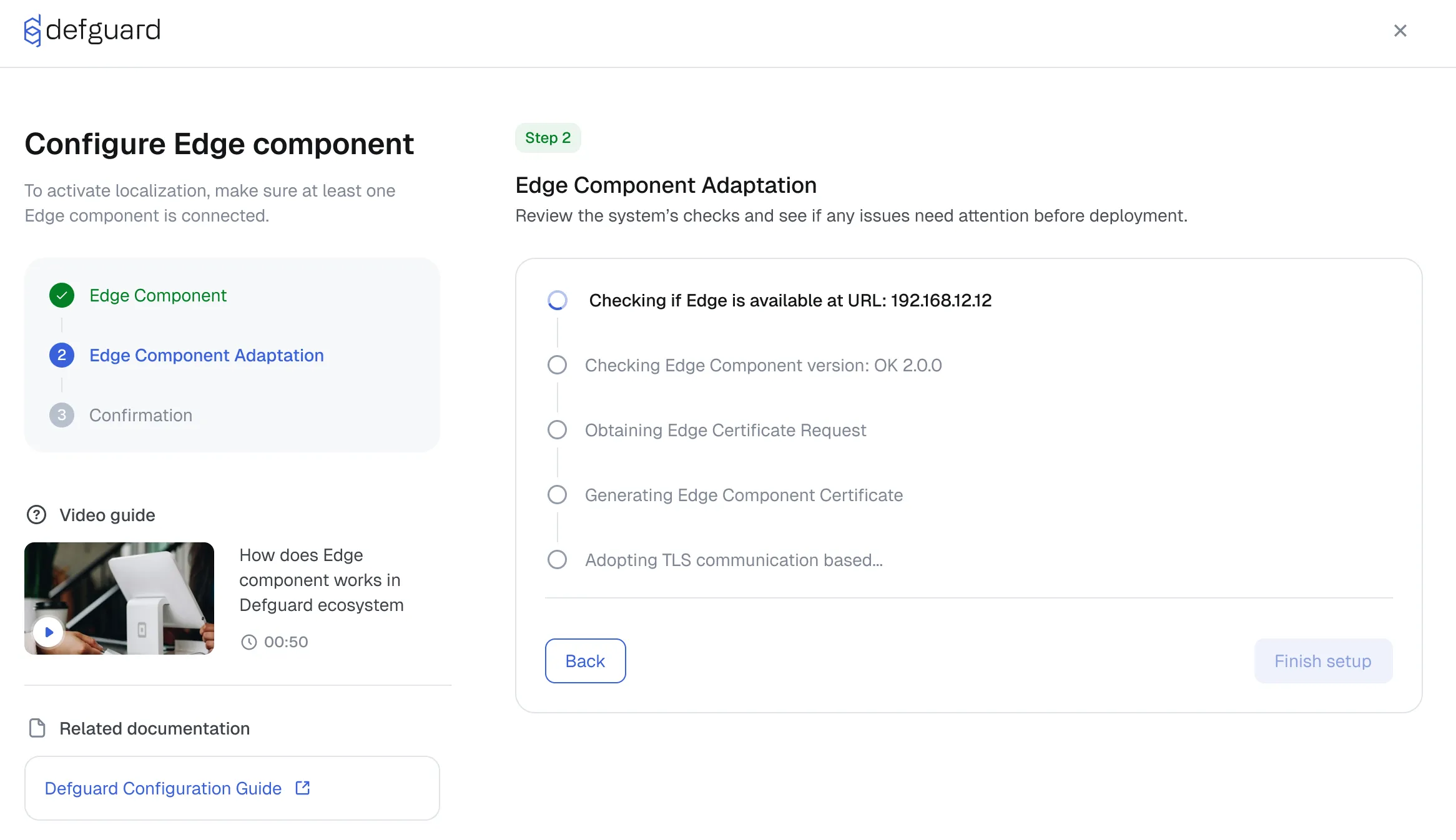
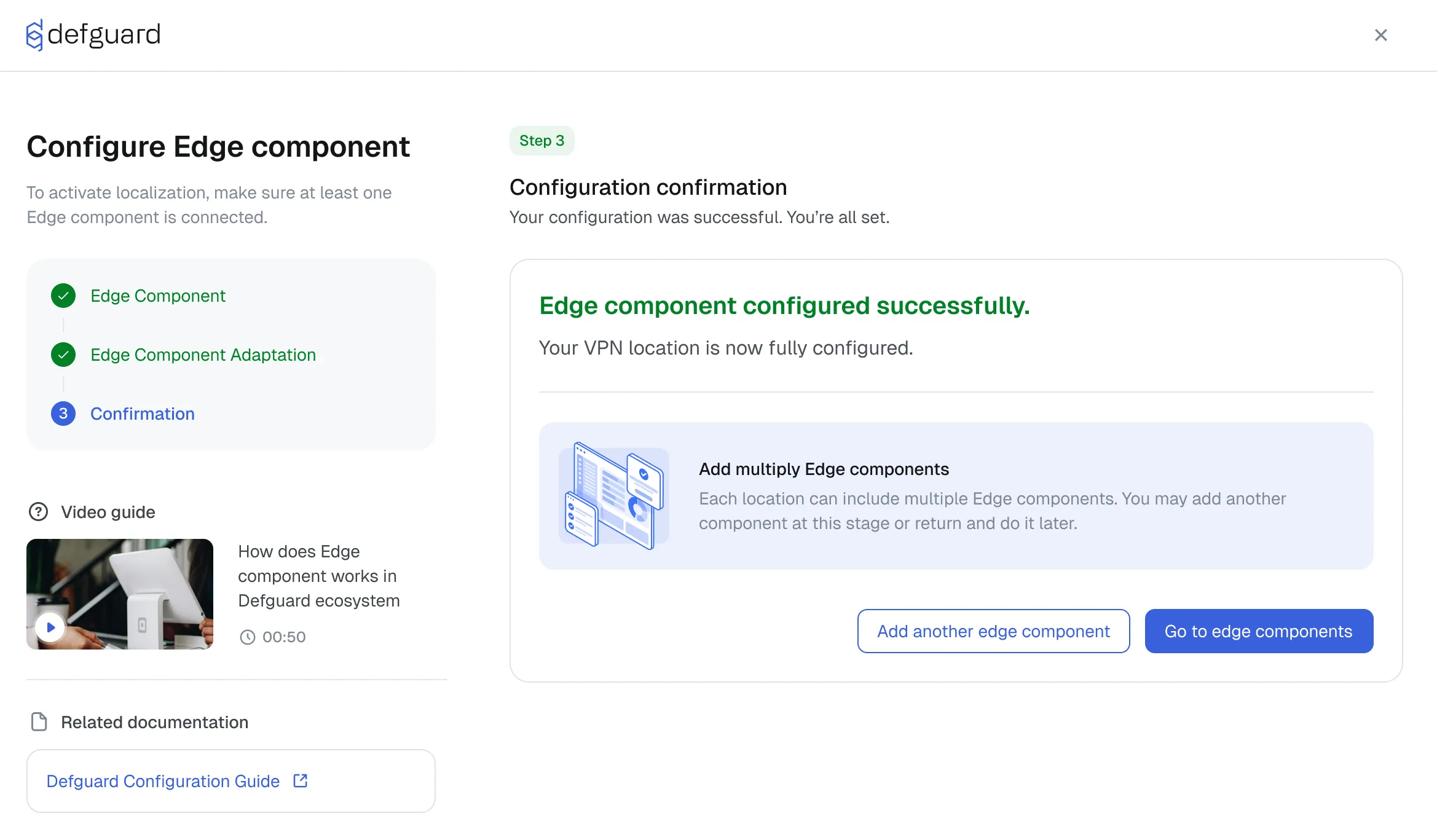
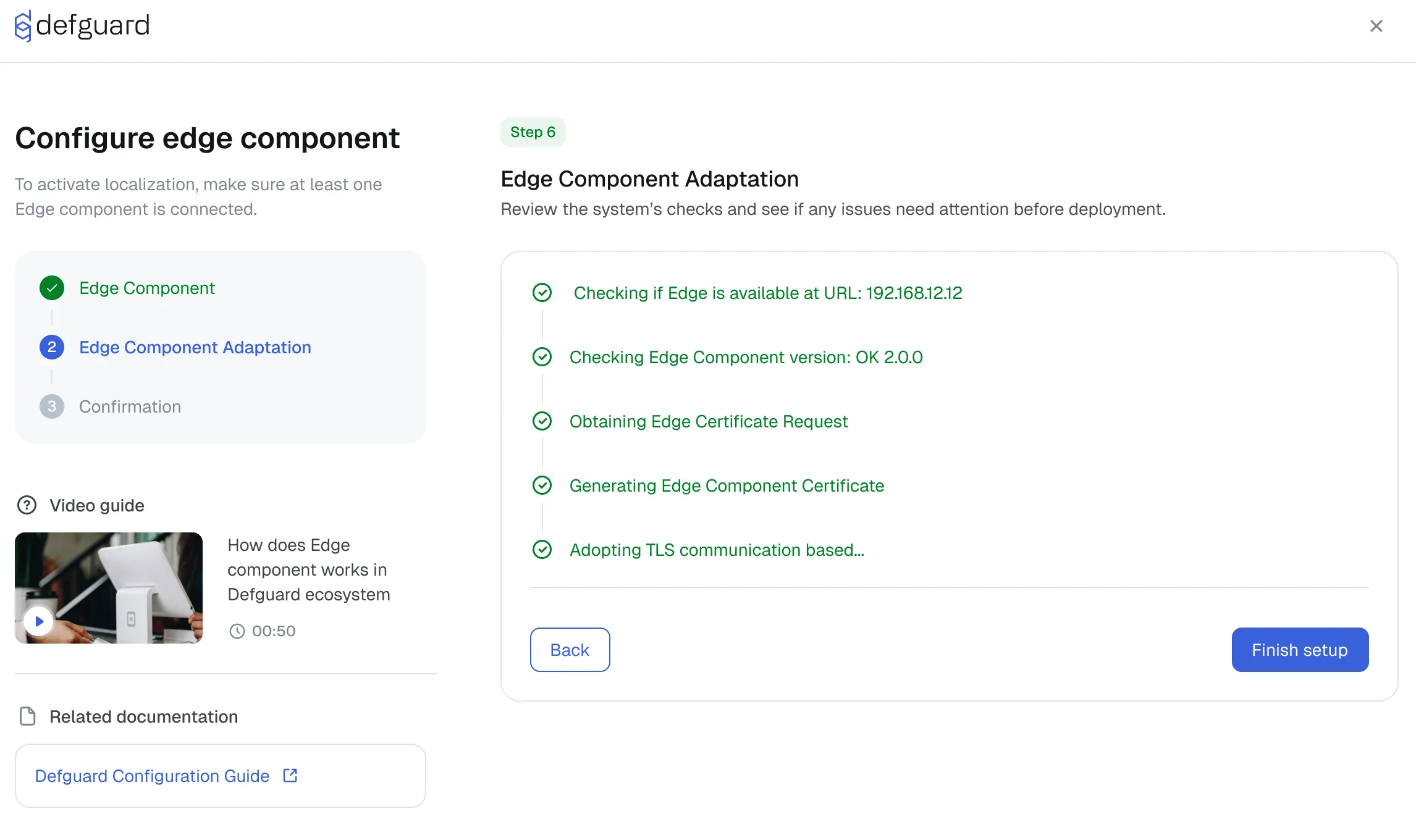
To give you an idea what we’re building, we share a preview of Edge Component (eg. Defguard Proxy) configuration flow in Defguard control plane (core).
And finally Defguard 2.0 will provide high-availability of all components delivering secure and scalable deployments for any type of organisation.
If you’re interested in learning more about current and future Defguard capabilities, connect with us to discuss how Defguard can meet your enterprise VPN needs.