

Defguard 2.0 stable is now available
April 30, 2026 • Robert Olejnik
4 min to read
After months of development and testing, the final 2.0 version is here.
It’s a significant step up from version 1.x, featuring a completely redesigned UI, a new and easy deployment approach (and component communication security), and some major architectural changes. If you are interested in more details, please read this blog post.
If you new to Defguard here is quick 2min video why Defguard (vs legacy VPN/Security approach):
Since security always comes first - even before our (still amazing) features - this release was tested by our security team, ISEC, alongside their new companion, Striga.AI. We have fixed all major findings before the release.
As always, a full pentesting report will soon be released on our pentesting page.
It’s a significant change, introducing a new approach to management, new wizards, and a new method for automatically adopting and securing all Defguard components.
See the new Defguard in action and how easy it is to deploy and manage:
See how easy it is to setup High Availability:
Here we’ve discussed why firewall management has changed, and here you can see it in action:
This feature will be useful for new deployments, as starting from version 2.0, there is no need to deploy a reverse proxy and configure SSL certificates it’s built-in!
See it in action:
A feature long-awaited by many is finally here! You can now assign IP addresses to all networks and user devices via the user context menu, or to a specific device through the device context menu:
Assign static IPs for users’ devices
You can now enable automatic enrollment initiation for each synced user from LDAP or Active Directory. See about this feature in documentation.
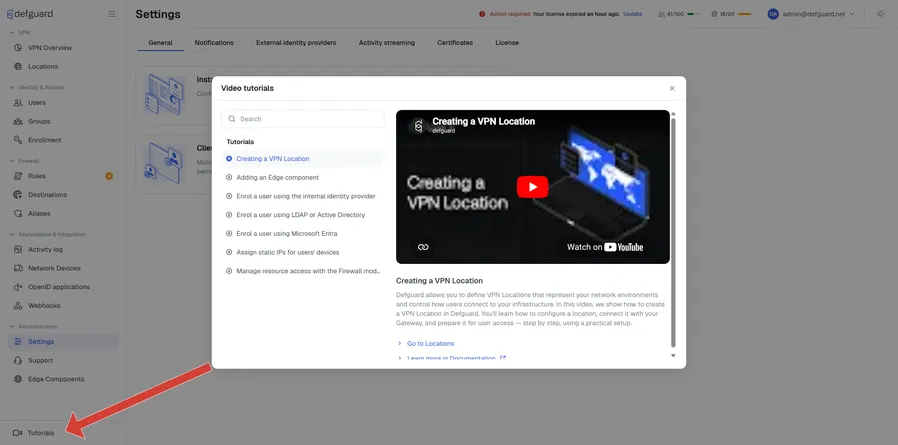
We are introducing a new Video Tutorial section, where you can search and play various tutorials we will publish:
We have prepared a dedicated migration wizard if you are upgrading, see the documentation or the tutorial:
In version 1.x, business features were free up to certain limits without requiring a license. If you were previously using these features without a license, starting with version 2.0, you will need to register for a free business license to continue using them: https://defguard.net/get-free-business/.
The good news is that we have raised the limits for the free tier, and it now supports up to 10 users (and 30 devices) for free!
You can now quickly deploy all components in a single image for testing purposes using an OVA virtual image, as well as deploy each Defguard component separately using the same image with Cloud-Init options. More details are available in the documentation.
If you are looking for more details, we have been documenting all features and changes in blog posts about our Alpha1, Alpha2 and Beta releases.
We will be officially supporting the 1.6 release with bug and security fixes until October 31, 2026, giving you 6 months to migrate to the new major release.
We have decided to adopt a new release policy from now on, where we build and ship just one large feature per release as quickly as possible. The current release plan is:
2.1 - Device Policy Postures: verify that devices meet specific security and configuration requirements before granting them access to the network - detailed roadmap 2.2 - Device Attestation - cryptographically verify a device’s hardware identity to confirm it is a known and trusted machine - - detailed roadmap